
The Policy Changes We Need to Unlock Housing Development
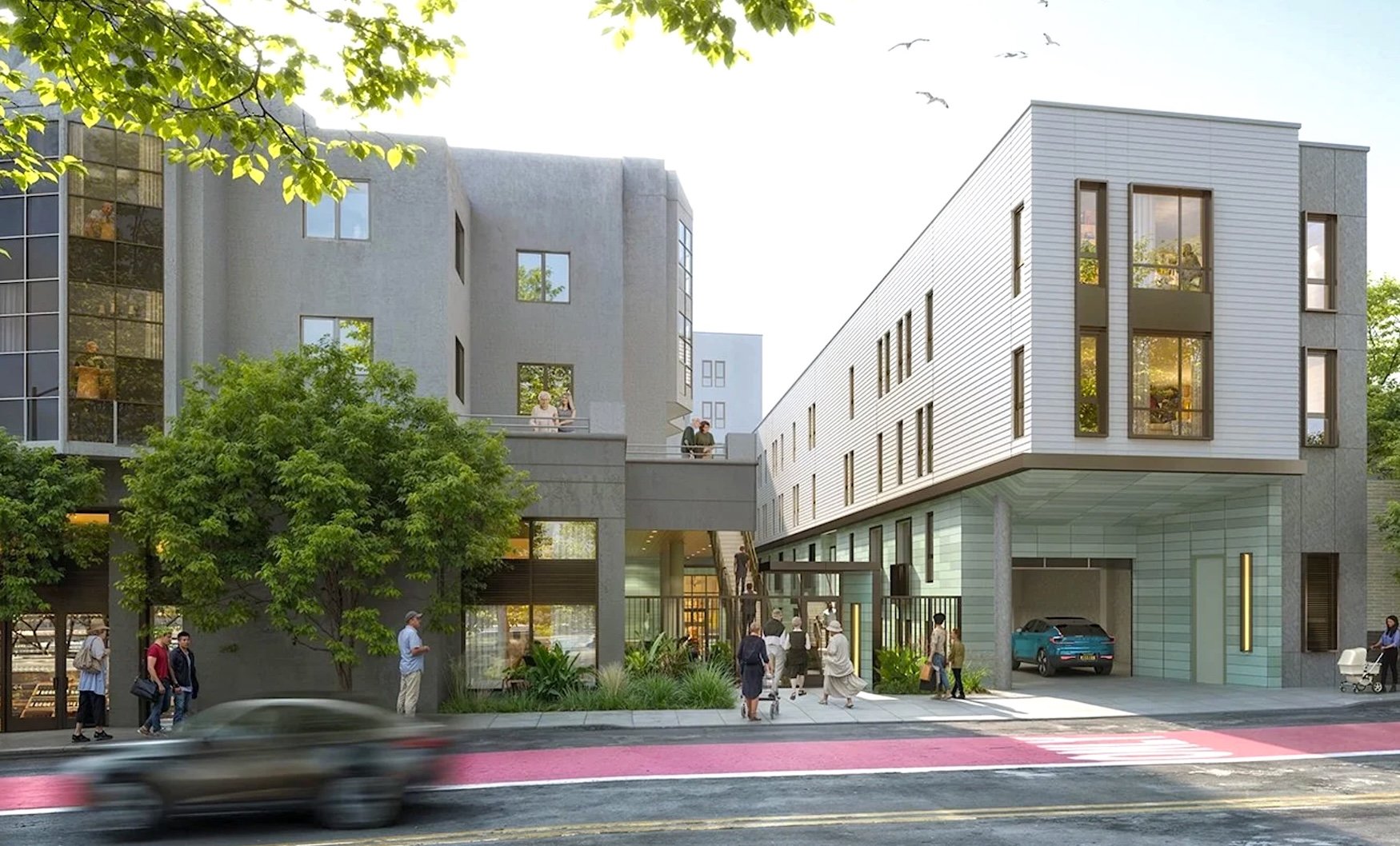
Bar Architect’s rendering of 3333 Mission.
Last week, a reporter reached out for an interview about a story he was writing on the impact of SB 423 on development in San Francisco. Of course, SB 423 was a big deal when it passed. Housing advocates like HAC have been clamoring for a ministerial approval process for years. Thanks to Senator Wiener, the process of getting multifamily housing approved is faster and easier than ever. In some cases, the law has eradicated the local, pro-housing vs. NIMBY land use fights, which used to dominate housing politics. However, there’s a difference between getting a project approved and actually building it. While SB 423 has created a pathway for thousands of new units to enter the development pipeline, these projects still need the right financial incentives to get off the ground. In many cases, both SB 423 projects and non-SB 423 projects have faced financial feasibility as a major barrier to new development.
Many are familiar with some of the reasons affecting the economics of projects. For the last couple of years, volatile interest rates and expensive material and land costs have been highlighted as factors that make it difficult to get the financing of a project right. To some extent, broad economic issues are out of our control. When it comes to an individual city like San Francsico, local policymakers can only do so much. But that’s not say there’s nothing that can be done.
The cost of building housing is also influenced by local policy. To that end, if local policy is creating a barrier to new housing, we should identify the issue and reform the laws that are leading to outcomes we don’t want. So what are the policies adversely affecting the economics of housing production? Recently, the conversation on housing has focused on two main drivers: local transfer taxes and impact fees.From conversations with developers and examining pro-formas, it’s clear that if we want housing to not only be approved but also built, we need investigate reforming these two policy areas.
What happens when the tax on housing is too high?
In a recent San Francsico Chronicle op-ed, David Brockman called out San Francisco for getting in its own way by charging sky-high taxes on new housing that make it too expensive to build the homes the city needs. In fact, San Francisco taxes new housing at about the same rate that it taxes cigarettes.
For a city committed to building more housing, taxing the sale of new housing at the same rate as cigarettes is an unusual approach. Do city leaders want people smoking cigarettes? No, that’s why there’s a very high tax to purchase them. Do city leaders want more housing to be built in San Francisco to address the city’s chronic housing shortage?
Measure ULA
But it's not just San Francisco; the City of Los Angeles' Measure ULA is another example of a major metro area in California with tax rates that deter the production of new housing. While it was dubbed a “mansion tax” designed to generate revenue for the city that would then be reinvested in affordable housing and homelessness prevention programs, Measure ULA has had the unintended consequence of making it more difficult to build multifamily housing.
In January, we sent an email asking people to show their support for Los Angeles City Councilmember Nithya Raman's motion to put an amended measure on the June 2026 ballot with language aimed at limiting the tax's impact on multifamily housing production.
Ultimately, the L.A. City Council rejected the proposal; however, transfer taxes and their impact on housing will continue to be an important issue at the state and local level moving forward.
To be clear, HAC supports taxes and fees on housing that help cities grow and prosper. Taxing the right things at the right rate can generate valuable revenue for a city. Revenue that gets reinvested into important areas like affordable housing, homeless prevention programs, and infrastructure improvements. However, taxes on housing can't come at the expense of actually building housing.
HAC is advocating for transfer tax reform that reduces penalties on new multifamily residential construction in both San Francisco and Los Angeles, while also urging state lawmakers to implement important guardrails to manage the proliferation of these new taxes across the state.
When Impact Fees Become Impact Barriers
As mentioned, impact fees have also been a topic of discussion. KQED’s Adhiti Bandlamudi wrote a recent article about the impact, impact fees can have on new housing development. The piece highlights how cities require developers to pay a slew fees when building a new project to fund infrastructure and municipal services.
The thinking behind impact fees is that when new housing gets built, cities need additional revenue to support the new residents of the development, including money that goes toward schools, parks, streets, sewage, electricity, and public art.
This makes sense in theory; however, in practice, these fees are so costly they drive up the cost of development and can limit how much new housing gets built in the first place.
A recent report from UC Berkeley’s Terner Center for Housing Innovation “looked at some 700 projects across the state built between 2020 and 2023 and found those fees totaled a whopping $1.2 billion — money the report’s author, Ben Metcalf, said could be better spent building more housing.”
Therein lies the fundamental tension with both transfer taxes and impact fees. Cities understandably need revenue to fund schools, parks, transportation, and services. But when the costs imposed on new housing become too high, the result is fewer homes, fewer residents, and less long-term revenue overall.
Impact fees are meant to help cities grow and flourish. But if they prevent housing from being built in the first place, they become less of a tool and more of a barrier.
Housing Needs a Feasible Pathway, Not Just an Approved One
The last decade of housing policy has been defined by major wins in streamlining approvals. Laws like SB 423 have made it significantly easier to get compliant multifamily housing projects entitled, cutting through years of delay and uncertainty.
But approvals alone don’t pour concrete.
Today, are stuck in limbo. While entitled, they’re unable to secure financing because the numbers simply don’t pencil.
That’s why the next chapter of housing reform must focus not only on process, but on financial feasibility.
