
Single-Stair Reform in California: A Local Breakthrough and What’s at Stake
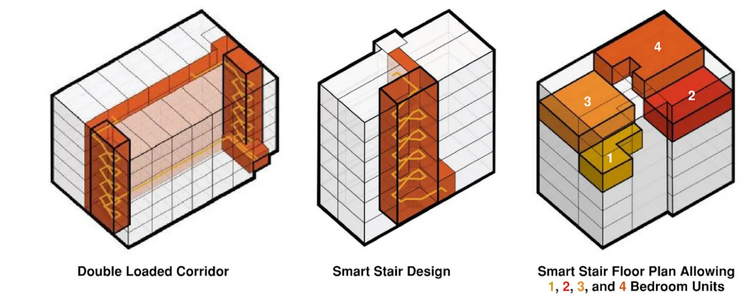
Double-loaded corridor versus single-stair buildings (Source)
California has been studying whether to allow taller multifamily buildings with a single stair — a modest-sounding code reform with major implications for housing feasibility, livability, and affordability. The past two months have brought both a major breakthrough and a looming challenge: Culver City has become the first city in the state to successfully enact a six-story single-stair ordinance, but a statewide local building code freeze that went into effect on October 1st means no other cities can legally follow suit. What happens in the months ahead — in the legislature and in the state’s Single-Exit Stair Work Group — will determine whether this promising model scales or stalls.
A Tale of Two Reform Efforts
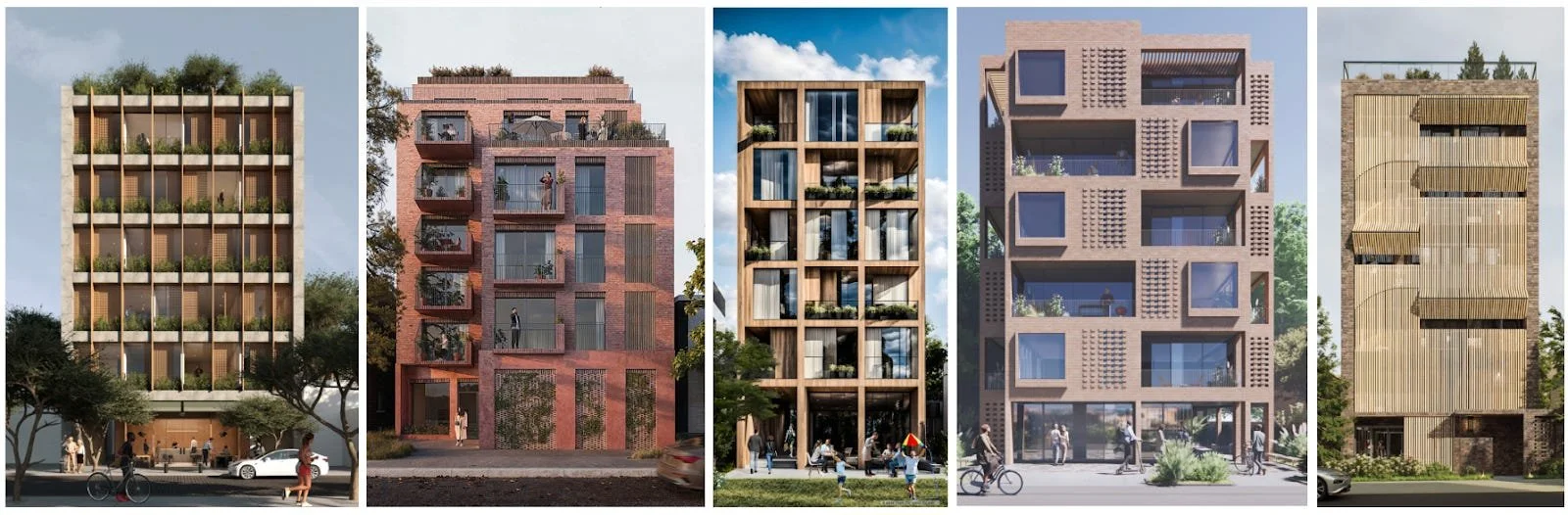
In countries like Germany, South Korea, and Switzerland, mid-rise residential buildings often wrap around a single central stairwell, allowing architects to use small urban lots more efficiently to build light-filled, family-friendly units and realize construction cost savings between 6–13%. Closer to home, cities like Seattle, New York, and Austin already allow single-stair buildings up to six stories. At least 21 other U.S. jurisdictions are exploring similar reforms.
California’s journey began with Assemblymember Alex Lee’s 2023 bill, AB 835, which originally proposed a statewide code change but was ultimately amended to initiate a study on the subject, with recommendations to be released by the end of this year. Because that working group was housed in the Fire Marshal’s office, insiders expect it will make a cautious recommendation that does not align with international best practices, allowing single-stair buildings to grow only from three to four stories — while either rejecting taller options or attaching such onerous conditions as to make them infeasible.
Meanwhile, a parallel push has unfolded at the local level — only to collide with a statewide code freeze enacted by AB 130, the 2025 budget trailer bill that included language barring new local building code amendments after October 1, 2025 for a six-year period. Cities raced the clock:
In Los Angeles, Councilmembers Nithya Raman and Katy Yaroslavsky came close — but ultimately withdrew their ordinance due to unworkable conditions put forward by the city’s Building Department, as well as opposition from the firefighters union and city attorney.
In Santa Monica, the council succeeded in adopting a local AMMR bulletin that establishes workable code equivalency standards for single-stair buildings up to six stories in height.
In Culver City, HAC worked closely with Councilmember Bubba Fish to garner unanimous support for a code amendment allowing six-story single-stair construction modeled after Seattle’s standards — just days before the AB 130 deadline.
In San Jose, HAC worked with the council, Councilmember Anthony Tordillos and Mayor Matt Mahan to develop code standards for single stair buildings up to 6 stories, but are currently precluded by state law from enacting them. As the second largest city in the state, they are now a key ally pushing for reform.
A Legal Precedent — and its Limitations
At the time, Culver City’s bold move faced legal uncertainty. California’s building standards law generally allows local amendments only if they are “more restrictive” than state code. On its face, reducing the number of staircases from two to one in a six-story building appeared to run afoul of that standard.
However, by pairing the relaxed stair requirement with enhanced fire protections — including stricter limits on building size, total occupancy, travel distances, and robust smoke control systems — the city argued its ordinance was equally if not more safe, and prepared express findings outlining how these provisions addressed local seismic, climatic, and topographical risks.
That argument now appears to have carried the day. The California Building Standards Commission has confirmed that it has accepted Culver City’s amendment for filing, thereby establishing a significant precedent. At the same time, AB 130’s code freeze means other cities may not adopt similar local amendments until at least 2031 — unless the legislature acts.
What Comes Next?
Upon the release of the state work group’s recommendations, the legislature will have a couple of options in the new year, from adopting new statewide standards to allowing more localities to follow in Culver City’s lead. Because the statewide recommendations are expected to be subpar, many housing advocates see promise in opening up the door to this latter route.
With Culver City’s success providing a legal and political blueprint, state lawmakers now have a clear opportunity: pass legislation that exempts local single-stair code amendments from the AB 130 freeze. This approach is consistent with the law’s original intent of slowing construction cost increases associated with new building code changes, and it would mirror a path taken by the Texas legislature earlier this year. Ultimately, it would allow other jurisdictions — like San José, which recently passed a resolution of its own to develop standards for single-stair buildings— to follow Culver City’s lead, building a growing political consensus to update the statewide code and allow six-story single-stair buildings everywhere.
We’ll share more updates as the Fire Marshal’s report is released and the legislature returns to session. The Housing Action Coalition will be working closely with partners statewide to ensure these essential reforms continue to move forward — and that cities have the tools they need to build safe, livable, and attainable homes for all Californians.
