HAC ED Recap: New Zoning Tools and Delivering Affordable Housing
On September 24th, HAC welcomed two speakers whose work intersects at one of housing’s biggest challenges: how we actually build more of it faster, smarter, and more equitably.
We heard from Kyle Vansice, co-founder of Cedar, a technology startup rethinking infill development from the ground up, and Ramie Dare, Director of Real Estate Development for the Bay Area at Mercy Housing California, who shared what it takes to deliver affordable housing in today’s tough funding and regulatory environment. Together, they offered a grounded look at the tools, tradeoffs, and realities shaping housing production right now.
Cedar: A New Tool for Infill Housing
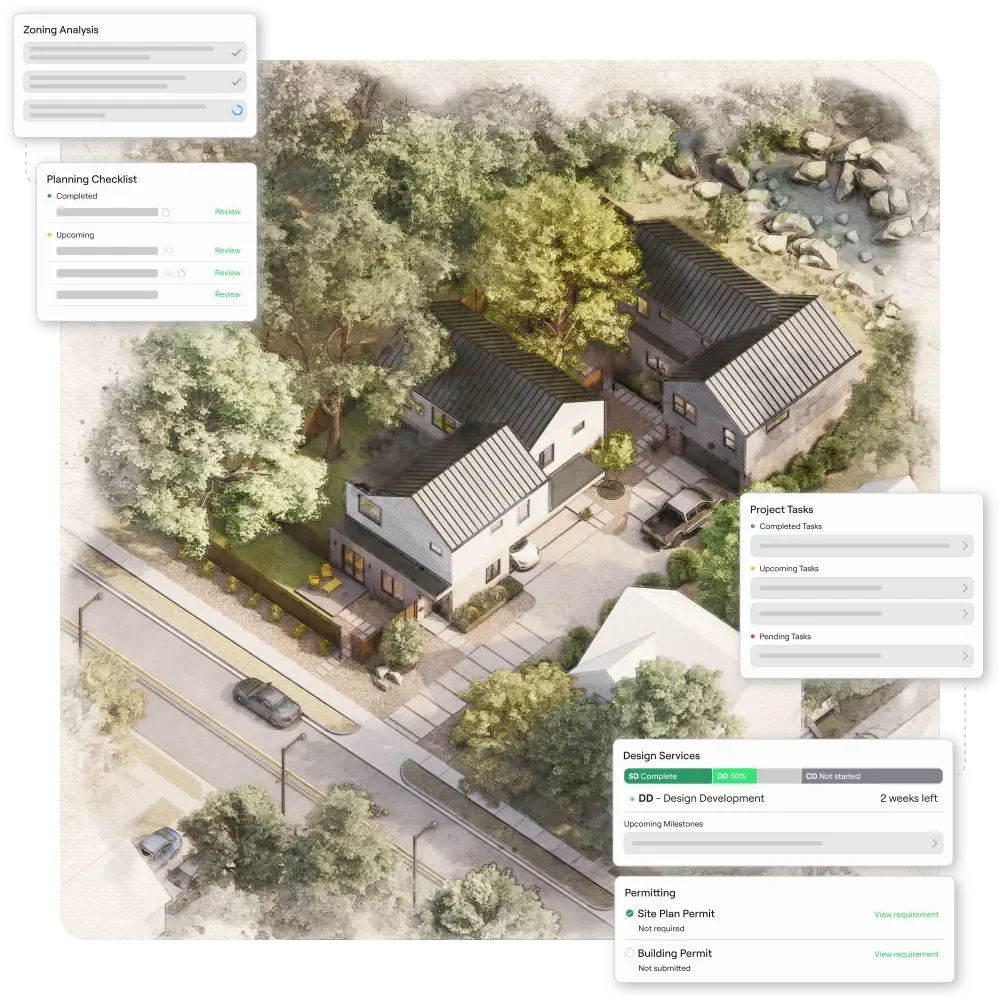
Kyle Vansice introduced Cedar, a planning and design platform built to take on one of the most complex and often overlooked tasks in housing: understanding what can actually get built on a parcel, especially on small or irregular infill sites. The tool bridges the gap between zoning theory and development feasibility, supporting users in navigating early-stage tradeoffs.
How it works:
Zoning + Data: Cedar maps base zoning and overlays across 26,000 U.S. cities, including deeper zoning layers often missing from city GIS systems. Detailed overlays currently exist for cities like San Francisco, Austin, Denver, and Philadelphia.
Scenario Testing: Developers can model zoning strategies, maximize yield, or apply recent reforms, and the platform generates options in real-time.
AI-Powered Zoning Translation: The software uses AI to interpret zoning code nuances, a critical feature in cities with fragmented or outdated rules.
Infill-Focused Design Catalog: Unlike platforms aimed at large-scale greenfield development, Cedar offers tailored “missing middle” options designed to accommodate various unit types and lot conditions.
This tool stands out for its usefulness in places like San Francisco, where the Family Zoning Plan is creating new opportunities for small-scale, infill development. As new rules unlock more parcels for housing, platforms like Cedar can help developers understand how to actually make use of that land and get more diverse, affordable homes off the ground.
We encourage HAC members to stay in touch with Cedar’s team. With more real-world input from builders, architects, land use attorneys, advocates, and planners, the platform can continue improving and become a stronger ally in implementing smart zoning reform.
Mercy Housing: Delivering Affordable in a Brutal Environment
Ramie Dare brought a grounded, unfiltered look at what it takes to get affordable housing built in California right now. As Mercy Housing’s Bay Area Director, she oversees development at one of the country’s largest nonprofit affordable housing organizations.
Mercy has delivered over 12,000 homes across 166 communities, including 3,200 in the past five years and 3,300 currently in the pipeline. Their recent ULI award for the Sister Lillian Murphy community reflects both design excellence and deep mission alignment.
What they’re navigating:
Funding Constraints: State and local sources are stretched thin, forcing creative financing strategies. Mercy is exploring how to deliver new family housing in San Francisco without relying entirely on traditional public funding.
Bottlenecks Beyond Entitlements: Ramie pointed out that construction-phase delays – such as new requirements for valve shut-offs issued mid-project – are a big issue that affect cost. These midstream changes are difficult to manage and can delay occupancy for months.
Balancing Mission with Market: To make projects pencil, Ramie shared how current difficulties have pushed affordable organizations into adjusting their income targets upward. It’s a practical necessity in the current environment, though it complicates efforts to reach the lowest-income households.
Policy & Process Insights:
Labor standards are applied regionally; different approaches for Sacramento vs. the Bay Area based on what’s feasible locally.
TCO delays are now a major pain point, with most of Mercy’s recent Bay Area buildings delivered behind schedule.
Streamlining funding remains a top advocacy priority. While new resources are being approved, many are still tied up in multiple, overlapping applications that slow down the process.
Mercy is actively working to build relationships with HAC members and city leaders, and welcomed opportunities to host site tours, celebrate recent openings, and advocate for more streamlined processes that can help get more homes built, faster.
Final Thoughts: Housing Intelligence in Action
This meeting brought together two sides of the same challenge: tools to make smarter early-stage planning decisions, and experience from the front lines of getting real buildings across the finish line.
Cedar’s technical innovation and Mercy’s equity-driven realism underscored the same takeaway: we need both vision and systems change to close the gap between housing policy and housing reality.
Call to Action
Want to give feedback or explore Cedar’s tool? Reach out to Kyle at kyle@cedar.build
Interested in touring a Mercy Housing project? Keep an eye out! We’re planning opportunities soon.
Want to support the Family Zoning Plan and infill-friendly tools like this? Get involved.
Thank you to Kyle and Ramie for their insight, and to our HAC community for continuing to ask sharp questions, lift up new ideas, and stay focused on solutions.